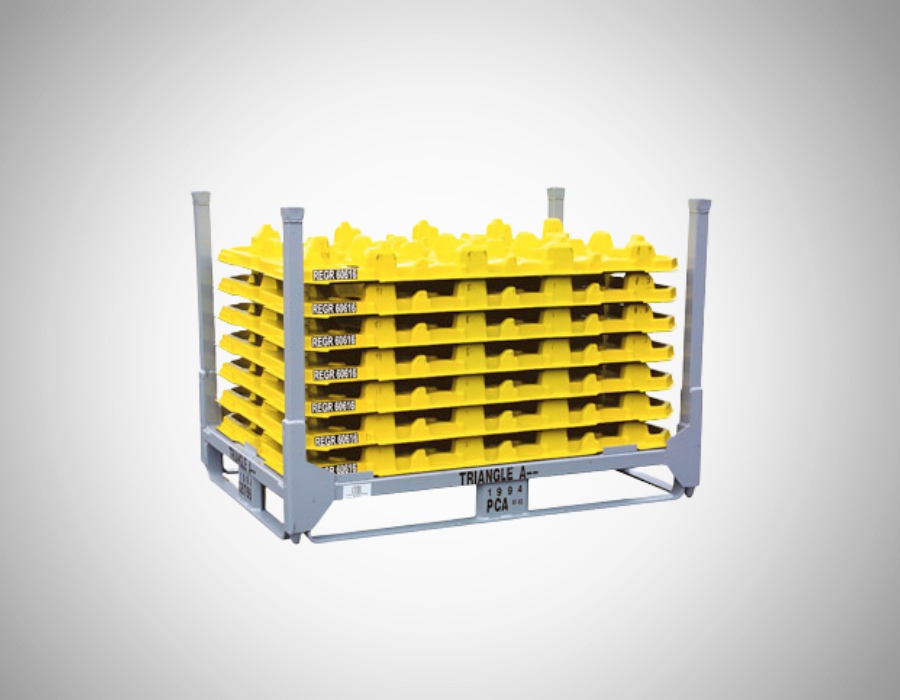



Rotational molding is a particularly efficient plastics processing method, ideal for manufacturing large, technical parts with complex shapes. Whether for industry, transportation, or packaging, this technology offers strength, durability, and design flexibility.
What is rotomolding?
Rotational molding, or rotomolding, involves heating a mold containing the plastic material and then rotating it on two axes. This rotation allows the material to distribute evenly on the mold walls, creating hollow, one-piece parts.
The key points of the process are:
- Production of parts without assembly or welding
- Homogeneous distribution of the plastic material
- Ability to create large parts and complex shapes
This technique combines simplicity and precision, offering high reliability for demanding technical applications.
Exceptional strength and durability
The rotomolded parts feature:
- A uniform thickness guaranteeing optimal mechanical resistance
- High resistance to shocks and vibrations, perfect for industrial environments
- Extended durability, with parts resistant to wear, weathering and mechanical stress over the long term
These qualities make rotomolding an ideal solution for transport, storage, packaging or any industrial application requiring robustness and reliability.
Almost unlimited design freedom
Rotational molding allows for:
- Creating complex and custom-made shapes
- Integrate certain technical functions directly, such as cable routing or fixings, without additional assembly.
- Adapting parts to the specific needs of customers
This flexibility is a major asset for companies seeking to combine innovation and technical performance.
An economical solution for medium-sized production runs
Rotational molding offers significant economic advantages for medium-volume production:
- The tools used are generally simpler and less expensive than those used for other plastics processes.
- Profitable production while maintaining optimal quality and durability
- An ideal solution for projects requiring customization and medium volumes.
- An environmentally friendly process
Rotational molding is compatible with the use of recycled plastics, allowing for:
- Reduce environmental impact
- Meeting regulatory requirements and consumer expectations
- To produce high-performance and durable technical parts
At CYTEC, our design office works with you to design your parts according to your technical needs and specific constraints. Whether you have a complex project or medium-volume production runs, we put our expertise at your service to offer you high-performance and sustainable solutions.
Contact us today to discuss your project and discover how rotomolding can meet your needs.